%20--%3e%3csvg%20version='1.1'%20id='Layer_1'%20xmlns='http://www.w3.org/2000/svg'%20xmlns:xlink='http://www.w3.org/1999/xlink'%20x='0px'%20y='0px'%20viewBox='0%200%20548.6%2081.8'%20style='enable-background:new%200%200%20548.6%2081.8;'%20xml:space='preserve'%3e%3cstyle%20type='text/css'%3e%20.st0{fill:%23B3B2B2;}%20.st1{fill:%23333333;}%20.st2{fill:%23CB2A27;}%20.st3{fill:%239E2F2B;}%20.st4{fill:url(%23SVGID_1_);}%20.st5{fill-rule:evenodd;clip-rule:evenodd;fill:url(%23SVGID_00000081627807623978665650000007530117608280222350_);}%20.st6{fill-rule:evenodd;clip-rule:evenodd;fill:url(%23SVGID_00000124158375052983877420000016440253345571772322_);}%20.st7{fill-rule:evenodd;clip-rule:evenodd;fill:url(%23SVGID_00000162331698164625215240000016248320423653895854_);}%20.st8{fill-rule:evenodd;clip-rule:evenodd;fill:url(%23SVGID_00000176745200934897492200000012315166769339453352_);}%20%3c/style%3e%3cg%3e%3cg%3e%3cg%3e%3cpolygon%20class='st0'%20points='270.3,9.2%20268.5,9.2%20268.5,8.5%20272.9,8.5%20272.9,9.2%20271.1,9.2%20271.1,14%20270.3,14%20'/%3e%3cpolygon%20class='st0'%20points='273.5,8.5%20274.5,8.5%20276.3,13.1%20278.2,8.5%20279.1,8.5%20279.1,14%20278.5,14%20278.5,9.5%20278.5,9.5%20276.6,14%20276,14%20274.2,9.5%20274.2,9.5%20274.2,14%20273.5,14%20'/%3e%3c/g%3e%3c/g%3e%3cpath%20class='st0'%20d='M299.9,0h4.1v79.5h-4.1V0z'/%3e%3cg%3e%3cpath%20class='st1'%20d='M331.7,8.9h19.8c18.7,0,31.5,12.8,31.5,29.4v0.2c0,16.8-12.8,29.7-31.5,29.7h-19.8V8.9L331.7,8.9z%20M336.1,12.8V64h15.4c16.5,0,27-11.3,27-25.4v-0.2c0-14-10.4-25.7-27-25.7H336.1z'/%3e%3cpath%20class='st1'%20d='M390.3,8h5.1v5.7h-5.1V8z%20M390.9,24.9h4.2v43.2h-4.2V24.9z'/%3e%3cpath%20class='st1'%20d='M405.4,75.3l2.4-3.3c5.1,3.9,11.2,6,17.5,6c10,0,16.9-5.7,16.9-16.8v-6.3c-3.8,5.3-9.5,10-18.1,10%20c-10.4,0-20.8-8-20.8-20.4v-0.2c0-12.5,10.4-20.5,20.8-20.5c8.6,0,14.5,4.5,18.1,9.7v-8.6h4.2v36.5c0,6.3-2,11.2-5.4,14.6%20c-3.8,3.8-9.4,5.7-15.7,5.7C418.1,82,411.4,79.7,405.4,75.3z%20M442.5,44.5v-0.2c0-10-8.9-16.5-17.8-16.5c-9.1,0-16.8,6.3-16.8,16.3%20v0.1c0,9.8,7.8,16.5,16.8,16.5C433.6,61,442.5,54.3,442.5,44.5z'/%3e%3cpath%20class='st1'%20d='M455.5,8h5.1v5.7h-5.1V8z%20M455.9,24.9h4.2v43.2h-4.2V24.9z'/%3e%3cpath%20class='st1'%20d='M473.8,57V28.7h-6.3v-3.8h6.3V11h4.2v13.9h15.2v3.8H478v27.9c0,6.2,3.6,8.5,8.6,8.5c2.1,0,3.9-0.5,6.3-1.5%20v3.9c-2.3,1.1-4.4,1.5-7.1,1.5C479.2,69,473.8,65.4,473.8,57z'/%3e%3cpath%20class='st1'%20d='M496.7,55.5v-0.2c0-9.1,7.7-14,18.9-14c6,0,10.1,0.8,14.3,1.8v-1.8c0-8.8-5.3-13.3-14.2-13.3%20c-5.3,0-9.5,1.5-13.6,3.5l-1.5-3.6c4.7-2.3,9.4-3.8,15.4-3.8c5.9,0,10.6,1.7,13.6,4.7c2.9,2.9,4.4,6.8,4.4,12.2v27h-4.1v-7.2%20c-3,4.2-8.3,8.1-16.5,8.1C505.3,69.1,496.7,64.6,496.7,55.5z%20M530,51.9v-5c-3.6-0.9-8.5-2-14.6-2c-9.2,0-14.2,4.1-14.2,10.1v0.2%20c0,6.3,5.9,10,12.5,10C522.5,65.4,530,59.9,530,51.9z'/%3e%3cpath%20class='st1'%20d='M544.4,6.3h4.2v61.9h-4.2V6.3z'/%3e%3c/g%3e%3c/g%3e%3cpolygon%20points='20.5,8.6%2020.5,50.5%2048.1,50.5%2048.1,68.2%200,68.2%200,8.6%20'/%3e%3cpolygon%20points='76.7,8.6%2089,28.8%20101.3,8.6%20122.4,8.6%20122.4,68.2%20102,68.2%20102,40.4%2089.2,60%2088.4,60%2075.7,40.4%2075.7,68.2%2055.5,68.2%2055.5,8.6%20'/%3e%3cpath%20d='M163.5,33.1l-4.6,12.3h9.3L163.5,33.1z%20M153.6,8.2h20.1l25.1,60l-22.3,0l-3.1-7.9h-19.8l-3,7.9h-22L153.6,8.2z'/%3e%3cpolygon%20points='242.6,8.6%20235.1,19.8%20246.8,37.1%20266.1,8.6%20'/%3e%3cpolygon%20points='266.6,68.1%20246.7,38.7%20235.1,55.9%20243.4,68.1%20'/%3e%3cg%3e%3cpolygon%20class='st2'%20points='201.6,67.7%20221.9,37.8%20202.5,9.1%20224.7,9.1%20244.2,37.8%20223.9,67.7%20'/%3e%3cpath%20class='st3'%20d='M224.5,9.6l19.1,28.2l-19.9,29.4h-21l19.5-28.8l0.4-0.6l-0.4-0.6L203.4,9.6L224.5,9.6%20M225,8.6h-23.5%20l19.7,29.2l-20.6,30.4h23.5l20.6-30.4L225,8.6L225,8.6z'/%3e%3c/g%3e%3cg%3e%3clinearGradient%20id='SVGID_1_'%20gradientUnits='userSpaceOnUse'%20x1='220.9093'%20y1='-950.0897'%20x2='220.9093'%20y2='-925.641'%20gradientTransform='matrix(1%200%200%20-1%200%20-916)'%3e%3cstop%20offset='0'%20style='stop-color:%23FFFFFF'/%3e%3cstop%20offset='0.9448'%20style='stop-color:%23D83A16'/%3e%3c/linearGradient%3e%3cpath%20class='st4'%20d='M203.5,9.6h21l13.9,20.5c0,0-5.1,2.5-18.3,4L203.5,9.6z'/%3e%3c/g%3e%3clinearGradient%20id='SVGID_00000102544490061922048680000006716673136051575428_'%20gradientUnits='userSpaceOnUse'%20x1='-829.9603'%20y1='-469.8219'%20x2='-829.2181'%20y2='-469.8219'%20gradientTransform='matrix(0%2056.2842%20-56.2842%200%20-26433.2578%2046715.5)'%3e%3cstop%20offset='0'%20style='stop-color:%23000000'/%3e%3cstop%20offset='8.490400e-02'%20style='stop-color:%231E1E1D'/%3e%3cstop%20offset='0.2228'%20style='stop-color:%23444443'/%3e%3cstop%20offset='0.3965'%20style='stop-color:%236C6B6B'/%3e%3cstop%20offset='0.5991'%20style='stop-color:%239D9C9C'/%3e%3cstop%20offset='0.8233'%20style='stop-color:%23D4D4D3'/%3e%3cstop%20offset='1'%20style='stop-color:%23FFFFFF'/%3e%3c/linearGradient%3e%3cpath%20style='fill-rule:evenodd;clip-rule:evenodd;fill:url(%23SVGID_00000102544490061922048680000006716673136051575428_);'%20d='%20M1,43.5C6.8,41.1,13.7,39,19.6,38V9.6H1V43.5z'/%3e%3clinearGradient%20id='SVGID_00000103957968551173334310000005412737639992854954_'%20gradientUnits='userSpaceOnUse'%20x1='-824.1308'%20y1='-473.5818'%20x2='-823.3696'%20y2='-473.5818'%20gradientTransform='matrix(0%2040.0685%20-40.0685%200%20-18886.7422%2033025.9883)'%3e%3cstop%20offset='0'%20style='stop-color:%23000000'/%3e%3cstop%20offset='8.490400e-02'%20style='stop-color:%231E1E1D'/%3e%3cstop%20offset='0.2228'%20style='stop-color:%23444443'/%3e%3cstop%20offset='0.3965'%20style='stop-color:%236C6B6B'/%3e%3cstop%20offset='0.5991'%20style='stop-color:%239D9C9C'/%3e%3cstop%20offset='0.8233'%20style='stop-color:%23D4D4D3'/%3e%3cstop%20offset='1'%20style='stop-color:%23FFFFFF'/%3e%3c/linearGradient%3e%3cpath%20style='fill-rule:evenodd;clip-rule:evenodd;fill:url(%23SVGID_00000103957968551173334310000005412737639992854954_);'%20d='%20M89,30.6l-12.8-21H56.5v25.1c24.2-3,48.1-1.9,64.9,0.1V9.6H102L89,30.6z'/%3e%3clinearGradient%20id='SVGID_00000045609548158379760350000004638969150694955421_'%20gradientUnits='userSpaceOnUse'%20x1='-828.1707'%20y1='-470.2902'%20x2='-827.4019'%20y2='-470.2902'%20gradientTransform='matrix(0%2050.0393%20-50.0393%200%20-23369.248%2041443.8047)'%3e%3cstop%20offset='0'%20style='stop-color:%23000000'/%3e%3cstop%20offset='8.490400e-02'%20style='stop-color:%231E1E1D'/%3e%3cstop%20offset='0.2228'%20style='stop-color:%23444443'/%3e%3cstop%20offset='0.3965'%20style='stop-color:%236C6B6B'/%3e%3cstop%20offset='0.5991'%20style='stop-color:%239D9C9C'/%3e%3cstop%20offset='0.8233'%20style='stop-color:%23D4D4D3'/%3e%3cstop%20offset='1'%20style='stop-color:%23FFFFFF'/%3e%3c/linearGradient%3e%3cpath%20style='fill-rule:evenodd;clip-rule:evenodd;fill:url(%23SVGID_00000045609548158379760350000004638969150694955421_);'%20d='%20M154.3,9.2l-11.9,28.4c5.1,0.9,10.5,1.1,17.7,1.8l3.4-9.1l3.5,9.2c6.3,0.2,11.4-0.5,18.1-1.5L173,9.2L154.3,9.2L154.3,9.2L154.3,9.2%20z'/%3e%3clinearGradient%20id='SVGID_00000098218655395796564910000006749387513598408615_'%20gradientUnits='userSpaceOnUse'%20x1='-817.4011'%20y1='-476.8813'%20x2='-816.6498'%20y2='-476.8813'%20gradientTransform='matrix(0%2030.094%20-30.094%200%20-14101.042%2024605.1211)'%3e%3cstop%20offset='0'%20style='stop-color:%23000000'/%3e%3cstop%20offset='8.490400e-02'%20style='stop-color:%231E1E1D'/%3e%3cstop%20offset='0.2228'%20style='stop-color:%23444443'/%3e%3cstop%20offset='0.3965'%20style='stop-color:%236C6B6B'/%3e%3cstop%20offset='0.5991'%20style='stop-color:%239D9C9C'/%3e%3cstop%20offset='0.8233'%20style='stop-color:%23D4D4D3'/%3e%3cstop%20offset='1'%20style='stop-color:%23FFFFFF'/%3e%3c/linearGradient%3e%3cpath%20style='fill-rule:evenodd;clip-rule:evenodd;fill:url(%23SVGID_00000098218655395796564910000006749387513598408615_);'%20d='%20M243.1,9.6l-6.9,10.2l5.7,8.5c5.8-1.8,9.2-3.2,13.7-6l8.5-12.6H243.1L243.1,9.6z'/%3e%3c/svg%3e)
%20--%3e%3csvg%20version='1.1'%20id='Layer_1'%20xmlns='http://www.w3.org/2000/svg'%20xmlns:xlink='http://www.w3.org/1999/xlink'%20x='0px'%20y='0px'%20viewBox='0%200%20548.6%2081.8'%20style='enable-background:new%200%200%20548.6%2081.8;'%20xml:space='preserve'%3e%3cstyle%20type='text/css'%3e%20.st0{fill:%23B3B2B2;}%20.st1{fill:%23FFFFFF;}%20.st2{fill:%23EDEDED;}%20.st3{fill:%23B2B2B2;}%20.st4{fill:%23CB2A27;}%20.st5{fill:%239E2F2B;}%20.st6{fill:url(%23SVGID_1_);}%20%3c/style%3e%3cg%3e%3cg%3e%3cg%3e%3cpolygon%20class='st0'%20points='270.3,9.2%20268.5,9.2%20268.5,8.5%20272.9,8.5%20272.9,9.2%20271.1,9.2%20271.1,14%20270.3,14%20'/%3e%3cpolygon%20class='st0'%20points='273.5,8.5%20274.5,8.5%20276.3,13.1%20278.2,8.5%20279.1,8.5%20279.1,14%20278.5,14%20278.5,9.5%20278.5,9.5%20276.6,14%20276,14%20274.2,9.5%20274.2,9.5%20274.2,14%20273.5,14%20'/%3e%3c/g%3e%3c/g%3e%3cpath%20class='st0'%20d='M299.9,0h4.1v79.5h-4.1V0z'/%3e%3cg%3e%3cpath%20class='st1'%20d='M331.7,8.9h19.8c18.7,0,31.5,12.8,31.5,29.4v0.2c0,16.8-12.8,29.7-31.5,29.7h-19.8V8.9L331.7,8.9z%20M336.1,12.8V64h15.4c16.5,0,27-11.3,27-25.4v-0.2c0-14-10.4-25.7-27-25.7H336.1z'/%3e%3cpath%20class='st1'%20d='M390.3,8h5.1v5.7h-5.1V8z%20M390.9,24.9h4.2v43.2h-4.2V24.9z'/%3e%3cpath%20class='st1'%20d='M405.4,75.3l2.4-3.3c5.1,3.9,11.2,6,17.5,6c10,0,16.9-5.7,16.9-16.8v-6.3c-3.8,5.3-9.5,10-18.1,10%20c-10.4,0-20.8-8-20.8-20.4v-0.2c0-12.5,10.4-20.5,20.8-20.5c8.6,0,14.5,4.5,18.1,9.7v-8.6h4.2v36.5c0,6.3-2,11.2-5.4,14.6%20c-3.8,3.8-9.4,5.7-15.7,5.7C418.1,82,411.4,79.7,405.4,75.3z%20M442.5,44.5v-0.2c0-10-8.9-16.5-17.8-16.5c-9.1,0-16.8,6.3-16.8,16.3%20v0.1c0,9.8,7.8,16.5,16.8,16.5C433.6,61,442.5,54.3,442.5,44.5z'/%3e%3cpath%20class='st1'%20d='M455.5,8h5.1v5.7h-5.1V8z%20M455.9,24.9h4.2v43.2h-4.2V24.9z'/%3e%3cpath%20class='st1'%20d='M473.8,57V28.7h-6.3v-3.8h6.3V11h4.2v13.9h15.2v3.8H478v27.9c0,6.2,3.6,8.5,8.6,8.5c2.1,0,3.9-0.5,6.3-1.5%20v3.9c-2.3,1.1-4.4,1.5-7.1,1.5C479.2,69,473.8,65.4,473.8,57z'/%3e%3cpath%20class='st1'%20d='M496.7,55.5v-0.2c0-9.1,7.7-14,18.9-14c6,0,10.1,0.8,14.3,1.8v-1.8c0-8.8-5.3-13.3-14.2-13.3%20c-5.3,0-9.5,1.5-13.6,3.5l-1.5-3.6c4.7-2.3,9.4-3.8,15.4-3.8c5.9,0,10.6,1.7,13.6,4.7c2.9,2.9,4.4,6.8,4.4,12.2v27h-4.1v-7.2%20c-3,4.2-8.3,8.1-16.5,8.1C505.3,69.1,496.7,64.6,496.7,55.5z%20M530,51.9v-5c-3.6-0.9-8.5-2-14.6-2c-9.2,0-14.2,4.1-14.2,10.1v0.2%20c0,6.3,5.9,10,12.5,10C522.5,65.4,530,59.9,530,51.9z'/%3e%3cpath%20class='st1'%20d='M544.4,6.3h4.2v61.9h-4.2V6.3z'/%3e%3c/g%3e%3cg%3e%3cg%3e%3cpolygon%20class='st2'%20points='0.5,67.9%200.5,9.1%2020.1,9.1%2020.1,51%2047.8,51%2047.8,67.9%20'/%3e%3cpath%20class='st3'%20d='M19.6,9.5v41.1v0.9h0.9h26.7v15.8H0.9V9.5H19.6%20M20.7,8.5H0v59.9h48.3V50.6H20.7V8.5L20.7,8.5z'/%3e%3c/g%3e%3cg%3e%3cpolygon%20class='st2'%20points='102.8,67.9%20102.8,38.8%2089.3,59.6%2088.9,59.6%2075.5,38.8%2075.5,67.9%2056.1,67.9%2056.1,9.1%2076.7,9.1%2089.3,29.6%20101.9,9.1%20122.4,9.1%20122.4,67.9%20'/%3e%3cpath%20class='st3'%20d='M121.9,9.5v58h-18.7v-27v-3.2l-1.8,2.7L89.2,59L76.8,39.8L75,37.1v3.2v27H56.6V9.5h19.8l12.1,19.8l0.8,1.4%20l0.8-1.4L102,9.5L121.9,9.5%20M122.9,8.5h-21.3L89.3,28.7L77,8.5H55.7v59.9h20.2V40.4l12.7,19.8h0.9l12.7-19.8v27.9h20.5V8.5H122.9%20z'/%3e%3c/g%3e%3cg%3e%3cpath%20class='st2'%20d='M177.5,67.9l-3.2-7.8h-20.5l-3,7.8h-21l24.8-59.3H174l24.8,59.3H177.5z%20M158.8,46h10.7l-5.3-14.2L158.8,46z'%20/%3e%3cpath%20class='st3'%20d='M173.7,9.1L198,67.5h-20.2l-2.9-7.2l-0.3-0.6H174h-19.9h-0.6l-0.3,0.6l-2.7,7.2h-20.1l24.4-58.4H173.7%20M158,46.5h1.4h9.4h1.4l-0.5-1.4L165,32.8l-0.9-2.4l-0.9,2.4l-4.7,12.4L158,46.5%20M174.3,8.1h-20.2l-25.2,60.2h22.2l3-7.8H174%20l3.2,7.8h22.3L174.3,8.1L174.3,8.1z%20M159.5,45.6l4.7-12.4l4.7,12.4H159.5L159.5,45.6z'/%3e%3c/g%3e%3cg%3e%3cpolygon%20class='st2'%20points='236.5,19.8%20243.7,9.1%20266.2,9.1%20247.7,36.2%20'/%3e%3cpath%20class='st3'%20d='M265.3,9.5l-17.7,26l-10.6-15.7L244,9.5L265.3,9.5%20M267.1,8.5h-23.5L236,19.6L247.8,37L267.1,8.5L267.1,8.5z%20'/%3e%3c/g%3e%3cg%3e%3cpolygon%20class='st2'%20points='244.6,67.8%20236.7,56%20247.7,39.5%20266.8,67.8%20'/%3e%3cpath%20class='st3'%20d='M247.7,40.4l18.3,26.9h-21L237.3,56L247.7,40.4%20M247.7,38.8L236,56l8.3,12.4h23.2L247.7,38.8L247.7,38.8z'/%3e%3c/g%3e%3cg%3e%3cpolygon%20class='st4'%20points='202.4,67.9%20222.8,37.9%20203.3,9.1%20225.6,9.1%20245.1,37.9%20224.7,67.9%20'/%3e%3cpath%20class='st5'%20d='M225.3,9.5l19.2,28.2l-20.1,29.6h-21.1l19.6-29l0.5-0.6l-0.5-0.6L204.2,9.4h21.1%20M225.9,8.5h-23.5l19.9,29.3%20l-20.7,30.5H225l20.7-30.5L225.9,8.5L225.9,8.5z'/%3e%3c/g%3e%3cg%3e%3clinearGradient%20id='SVGID_1_'%20gradientUnits='userSpaceOnUse'%20x1='166.4754'%20y1='-918.2897'%20x2='166.4754'%20y2='-934.5494'%20gradientTransform='matrix(1.5092%200%200%201.5092%20-29.5361%201419.9884)'%3e%3cstop%20offset='0'%20style='stop-color:%23FFFFFF'/%3e%3cstop%20offset='0.9448'%20style='stop-color:%23D83A16'/%3e%3c/linearGradient%3e%3cpath%20class='st6'%20d='M204.2,9.5h21.1L239.2,30c0,0-5.1,2.4-18.4,3.9L204.2,9.5z'/%3e%3c/g%3e%3cpath%20class='st1'%20d='M0.9,43.6c5.9-2.4,12.7-4.5,18.7-5.6V9.5H0.9V43.6z'/%3e%3cpath%20class='st1'%20d='M89.3,30.6L76.5,9.5H56.7v25.2c24.3-3,48.3-2,65.2,0.2V9.5h-19.6L89.3,30.6z'/%3e%3cpath%20class='st1'%20d='M154.8,9.1l-11.9,28.5c5.1,0.9,10.6,1.1,17.8,1.8l3.5-9.2l3.5,9.2c6.3,0.2,11.5-0.5,18.3-1.5L173.7,9.1H154.8%20z'/%3e%3cpath%20class='st1'%20d='M244,9.5l-6.9,10.3l5.7,8.5c5.9-1.8,9.2-3.2,13.7-6l8.6-12.7H244z'/%3e%3c/g%3e%3c/g%3e%3c/svg%3e)


China, Japan, South Korea and ASEAN to form working group on digital payments, crypto regulation
The decision comes after the group met in May in Uzbekistan and identified cross-border digital payments as a new area of cooperation.

Quick Take
- The ASEAN+3 member countries have agreed to set up a dedicated working group on cross-border digital payments and digital asset regulation.
- Finance ministers and central bank governors are expected to further discuss the matter at the next meeting in Nagoya in May 2027.
China, Japan, South Korea, and ASEAN member countries have agreed to set up a dedicated working group on cross-border digital payments and digital asset regulation.
According to a statement released Thursday, finance and central bank deputies gathered in Kyoto, Japan, this week to review progress in implementing the guidance set earlier by the ASEAN+3 finance ministers and central bank governors.
One major focus of the meeting was technological innovation, with discussions centering around cross-border payments and regulatory approaches to crypto assets. The deputies agreed to form the AMRO Cross-Border Digital Payments Program and a dedicated working group to support further policy talks.
The Kyoto decision is a result of a May meeting in Uzbekistan that identified cross-border digital payments as a new area of cooperation.
At that meeting, the group instructed deputies to establish modalities by the end of 2026 to deepen policy discussions on retail and wholesale payment connectivity, as well as regulatory approaches to stablecoins.
"Building on local currency‑based payment systems, technological innovation in cross‑border payments, such as tokenization, should be pursued in consistency with ongoing global discussions on policy […]," the group said in a May statement.
According to AMRO’s job post published last week seeking a consultant on cross-border retail payments, the initiative could cover research into a range of use cases, including person-to-person and person-to-merchant payments, tourism, e-commerce, and remittances.
Finance ministers and central bank governors are expected to further discuss the matter at the next meeting in Nagoya, Japan, in May 2027.
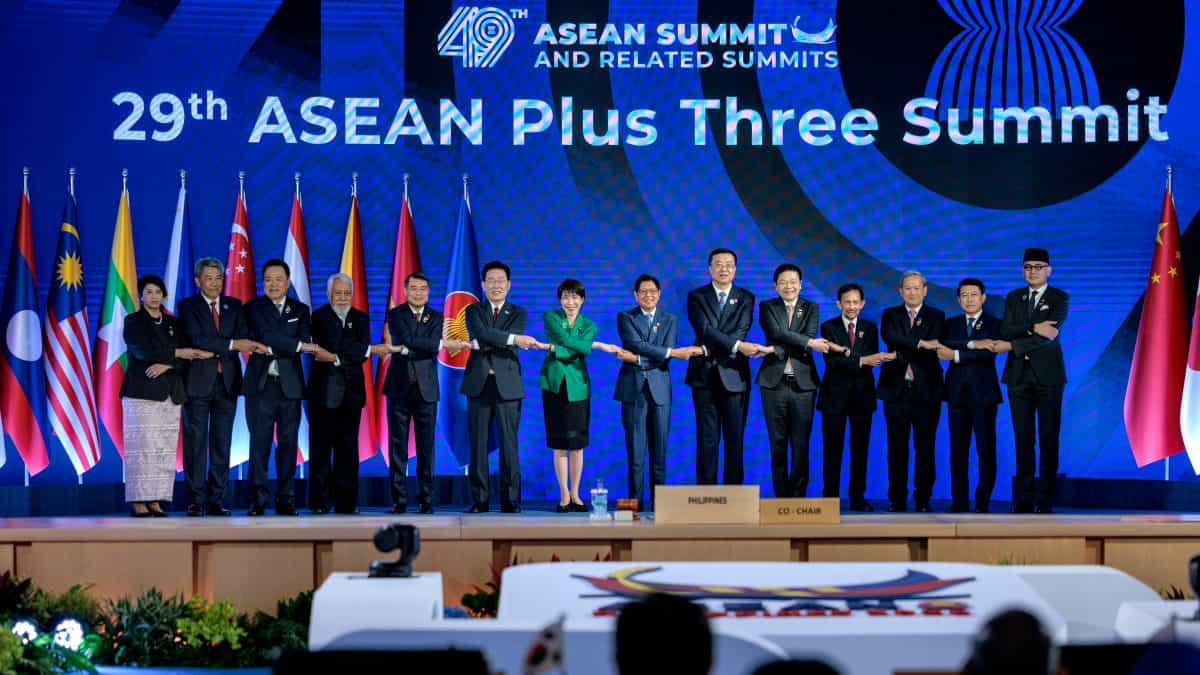
ASEAN+3 is an international cooperation framework that brings together 11 ASEAN member states and China, Japan, and South Korea. The 14 economies regularly convene to discuss political-security, economic, and socio-cultural matters.
Regional initiatives
The push for closer regional cooperation comes as Asian economies step up efforts to explore and test stablecoin and tokenization initiatives. Last month, the central banks of Malaysia and Thailand joined Singapore's BLOOM initiative to work on cross-border payments involving stablecoins and tokenized deposits.
Japan's top financial regulators are also studying tokenization of Japanese government bonds and a blockchain-based settlement system for stocks and Japanese government bonds. South Korea, meanwhile, is preparing tokenized securities from 2027 and local won stablecoins under its draft Digital Asset Basic Act.
Earlier this month, the central banks of the UK, Singapore, and Thailand also said they completed foreign exchange settlement trial linking traditional and tokenized systems.